

Supporting the AWARE Foundation's effort in marine conservation
We are raising funds to support the PADI AWARE Foundation's incredible efforts in marine conservation.
Since 1992, with the support of ocean advocates around the world, PADI AWARE has helped secure protection for 104 species of sharks and rays, funded more than 200 conservation initiatives through the Blueprint for Ocean Action, and removed over 2.5 million pieces of marine debris from the ocean floor.
At B&J Diving Centre on Tioman Island, we are fortunate to work in one of Malaysia's most beautiful marine environments. Every day, divers have the opportunity to experience vibrant coral reefs, sea turtles, reef sharks, and the incredible biodiversity that makes our oceans so valuable. These ecosystems are not only the foundation of our industry and local communities, but also an essential part of a healthy planet.
However, our oceans face growing challenges, including marine debris, habitat degradation, climate change, and the decline of vulnerable marine species. Protecting the underwater world requires more than awareness—it requires action. Through conservation-focused diving, environmental education, community engagement, and support for global initiatives such as the PADI AWARE Foundation, we can all play a role in creating a healthier future for our oceans.
At B&J and through divetioman.com, we believe that every diver has the power to become an ocean ambassador. By supporting this fundraiser, you are helping to fund critical conservation projects, protect marine life, reduce ocean pollution, and empower communities and organizations working on the front lines of ocean protection.
Every contribution, no matter the size, helps create a future where thriving coral reefs, healthy marine ecosystems, and abundant ocean life can continue to inspire generations of divers to come.
Together, we can help turn our passion for the ocean into meaningful action and move one step closer to achieving a healthy balance between humanity and the sea.
Thank you for supporting the ocean we all depend on and care so deeply about. 🌊🐢🦈
My Achievements

Fundraising page

Updated Profile Pic

Added a Blog Post

Received 5 Donations

Reached Goal

Increased Target
My Updates

From Coral Rescue to Reef Action: Our Fourth Eco Day on Tioman Island
Thursday 10th Sep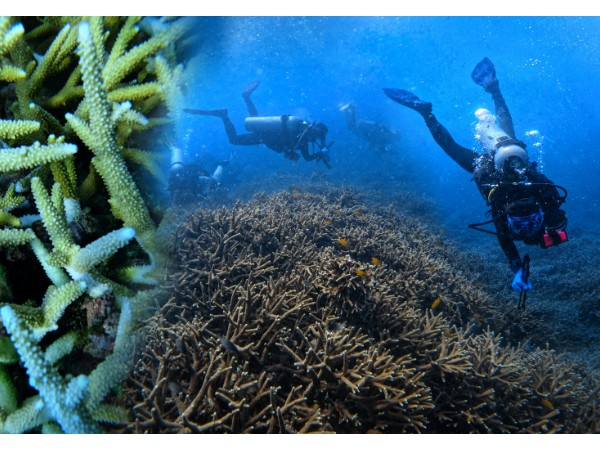
Building New Restoration Trials, Monitoring Coral Predators and Growing Our Conservation Community
Our fourth B&J Eco Day brought together several different sides of reef conservation in one day — coral restoration, predator monitoring, citizen science, education and community action.
This time, rather than focusing on one single activity, we wanted to experiment with what might work directly on our own reefs. The day therefore became an opportunity not only to take action, but also to test, observe and learn.
Coral restoration is not simply about attaching fragments to a structure and assuming they will grow. Different nursery designs, attachment methods, coral species and environmental conditions can produce very different results. Our two restoration projects are therefore deliberately starting as trial runs, giving us something we can monitor, compare and adapt over the coming months.
Building the Foundations for Coral Restoration
We started the morning at our House Reef, where our team constructed a new limestone-based coral restoration structure measuring approximately 3 x 2 metres and 1–1.5 metres high.
At the same time, we cleaned and prepared some of the existing metal structures on our artificial reef. Having already spent time underwater, these structures provide us with another potential platform to experiment with as a coral nursery and regrowth area.
The objective is not simply to attach as many corals as possible. Instead, we want to compare how rescued coral fragments perform on these two very different structures, monitor their survival and growth, and gradually learn which techniques are best suited to the conditions at our House Reef.
Six divers joined the work, bringing together Crown-of-Thorns volunteers, Divemaster Trainees, B&J staff and customers.
That mix is an important part of what our Eco Days are becoming. Conservation should not exist as a completely separate activity reserved for specialists. Divers at different experience levels can learn to observe reefs more carefully, collect useful information and participate in well-managed conservation activities.
Giving Broken Corals Another Chance
With our structures prepared, we moved on to our first coral rescue trial.
Rather than unnecessarily removing healthy coral from established colonies, we searched for viable coral fragments that had already become detached or broken and would have a poor chance of survival if left loose on unstable substrate.
This type of material is often referred to in coral restoration as “corals of opportunity.” Where suitable, these fragments can provide restoration material without deliberately removing additional coral from healthy donor colonies.
Each fragment had to be assessed before being collected. We looked at the condition and amount of living tissue, signs of bleaching or disease, algal growth, predation and the structural condition of the remaining skeleton. Suitable fragments were then carefully prepared for attachment.
A broken coral is not necessarily a dead coral. If healthy living tissue remains, a fragment can potentially continue growing when it is stabilised in an appropriate environment.
Our rescued fragments were divided between the new limestone structure and the cleaned metal structures, creating two small experimental restoration areas that we can revisit during future dives.
For now, these are exactly that: experiments.
Their real success will not be measured by how many fragments we attached on the day, but by how many remain attached, survive, maintain healthy tissue, grow and eventually establish themselves over the months ahead. Secure attachment is particularly important; restoration practitioners report that movement can delay successful attachment, while properly fixed fragments can begin growing onto their substrate within months under favourable conditions.
156 Drupella Snails at Renggis
The second major underwater project of the day took us to Renggis Island, where we conducted a Drupella survey and collection dive.
Drupella are small, coral-eating marine snails found throughout Indo-Pacific coral reefs. They use a specialised feeding structure called a radula to consume coral tissue. Like Crown-of-Thorns Starfish, Drupella are naturally occurring coral predators, meaning their presence alone does not necessarily indicate an unhealthy reef.
At elevated densities, however, the picture changes dramatically.
Scientific literature commonly describes 0–2 Drupella per square metre as relatively low/background densities, while a recent comprehensive review uses more than 2 individuals per square metre as a general outbreak threshold. Importantly, the threshold varies with coral abundance and species, and Drupella can form highly concentrated aggregations on individual colonies even when average reef-wide densities appear relatively low.
What we found at Renggis was therefore concerning.
Across an area of approximately 30 x 30 metres, our team collected 156 Drupella snails. More importantly than the total number alone, we encountered concentrated snail activity accompanied by severe visible impacts on affected corals.
Drupella distribution can be extremely patchy. Research has documented as many as 38 individuals on a single coral colony at sites where the overall population density still remained below the conventional outbreak threshold.
This is why our observations of the coral itself matter just as much as the final number of snails collected.
During the same survey we also encountered four Crown-of-Thorns Starfish, adding another source of coral predation to what we observed at Renggis.
Our objective is not to label native coral predators as “bad” animals or attempt to eradicate them. Predation is a natural part of a functioning reef ecosystem. Instead, the focus is on recognising situations where unusually concentrated predation may place additional pressure on coral communities, documenting what we see and using repeated observations to guide future action.
Research into Drupella outbreaks also supports manual removal as a useful short-term intervention, while emphasising that removal alone does not address the broader environmental conditions that may contribute to outbreaks.
Alongside the predator survey, we also completed and submitted a biodiversity report, continuing our effort to make observation and data collection a normal part of our conservation dives.
The next important step will be to return.
One survey gives us a snapshot. Repeated surveys can begin to tell us whether the Drupella population and associated coral damage at Renggis are decreasing, stable or continuing to develop.
From Tiny Nudibranchs to Sand-Producing Parrotfish
After a full day underwater, Eco Day continued in the evening with another round of presentations from our Divemaster Trainees and staff.
The first presentation explored nudibranchs — some of the reef's smallest but most spectacular inhabitants.
Around 3,000 species of nudibranchs are known, ranging from remarkably well-camouflaged animals to species displaying extraordinary colours. Those colours can serve an important purpose: bright colouration can warn predators about chemical or other defences.
Some aeolid nudibranchs take this considerably further.
After eating animals such as hydroids, anemones or corals, they can retain some of their prey's unfired nematocysts — the microscopic stinging structures used by cnidarians — and store them in specialised structures called cnidosacs. The nudibranch can subsequently use these stolen weapons for its own defence.
Our second presentation focused on parrotfish and their importance to coral reefs, including one fact that tends to change how people look at tropical beaches.
Parrotfish scrape algae from reef surfaces using their characteristic beak-like teeth. In the process, they can ingest calcium-carbonate reef material, grind it internally and eventually excrete the material as fine sand.
According to NOAA, large parrotfish can produce hundreds of pounds of white sand every year. Their feeding also contributes to the wider ecology of coral reefs.
So some of the beautiful tropical sand we enjoy above the water has, quite literally, already passed through a parrotfish.
Another $124.25 for Ocean Conservation
We finished the fourth Eco Day in what has now become our traditional way: bringing everyone together for our Eco Ocean Quiz Night.
After questions, competition and plenty of questionable confidence in obscure marine-life knowledge, the evening raised another USD 124.25 for ocean conservation.
But as with the kilograms of debris removed during previous Eco Days, the fundraising number is only one part of the story.
Across this Eco Day alone, people were:
building restoration structures, rescuing corals, preparing nursery areas, surveying coral predators, collecting Drupella, recording biodiversity, learning about reef ecology, presenting conservation topics and raising funds.
That combination is exactly what we want these days to become.
Testing, Learning and Improving
Our fourth Eco Day was perhaps our most experimental one yet.
We don't know whether limestone or our existing metal structures will prove to be the better platform for rescued coral at our House Reef. We don't yet know how the individual fragments will perform over the coming months. And one Drupella survey at Renggis cannot tell us whether the numbers and concentrated predation we encountered represent a temporary situation or part of a larger pattern.
That's precisely why we are doing it.
Good conservation isn't about carrying out one activity, taking a photograph and declaring success. It means returning to the same places, recording what happens, learning from what works and what doesn't, and adapting accordingly.
Our limestone structure and artificial-reef nursery now give us something tangible to monitor. The rescued corals give us our first restoration trial. The Drupella survey gives us a baseline for further investigation at Renggis. And our biodiversity reporting adds another piece of information about the reefs around Tioman.
Most importantly, divers from very different backgrounds spent their day actively contributing to that process.
From a broken piece of coral given another opportunity to grow, to 156 coral-eating snails carefully removed and recorded, to learning why a nudibranch can steal another animal's weapons and why a parrotfish helps create the sand beneath our feet, our fourth Eco Day continued to build on the same idea that started this initiative:
Notice. Learn. Act. Repeat.
Because protecting what we dive isn't one big action.
It is the accumulation of many smaller ones.
Sources & Further Reading
Zhang, F., Jia, X., Lin, Z., Jiang, Y. & Qu, M. (2024). The outbreak of Drupella snails and its catastrophic effects on coral reefs: a comprehensive review. Frontiers in Marine Science, 10:1290001. This is the strongest source for the Drupella outbreak threshold, ecological impacts and management discussion.
Read the Frontiers review
Lei et al. (2022). Spatial variability in the abundance and prey selection of the corallivorous snail Drupella spp. in southeastern Hainan Island, China. Frontiers in Marine Science. Useful for background densities, aggregation behaviour and the example of 38 individuals occurring on a single coral colony.
Read the Drupella field study
Reef Resilience Network. Restoration Techniques – Follow-up Questions and Answers. Practical information from coral-restoration practitioners covering corals of opportunity, nursery growth and attachment.
Reef Resilience coral-restoration resource
Smithsonian Ocean. How Sea Slugs Steal the Defenses of Their Prey. Background on aeolid nudibranchs, cnidocytes, nematocysts and cnidosacs.
Smithsonian Ocean – Nudibranch Defences
Smithsonian Ocean. Nudibranchs / A Collage of Nudibranch Colors. Background on nudibranch diversity, colouration and defence.
Smithsonian Ocean – Nudibranchs
NOAA National Ocean Service. How does sand form? Background on parrotfish feeding and their contribution to white carbonate sand.
NOAA – How Does Sand Form?
Expanding Our Impact for Ocean Conservation: Our Third Eco Day on Tioman Island
Wednesday 29th Jul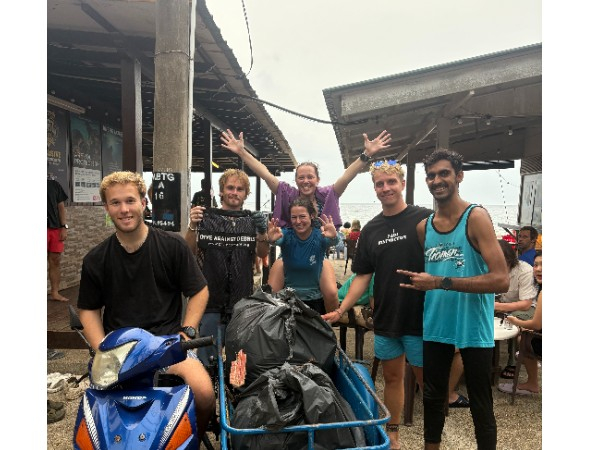
Another successful Eco Day brings our community together through conservation, education, fundraising, and a proud milestone with PADI AWARE.
Working Together for Cleaner Beaches
Every Eco Day reminds us that protecting the ocean is not about one big event—it is about building a community of people who care and who are willing to take action together. Our third Eco Day was another fantastic example of what can be achieved when staff, customers, and local ocean advocates work side by side.
We kicked off the day with a beach clean-up around Air Batang, where together we removed an incredible 45 kilograms of marine debris from Tioman's coastline. Every piece of rubbish collected helps prevent waste from entering the ocean, protecting marine life and preserving the reefs that make Tioman such a special place to dive.
Sharing Knowledge to Inspire Action
Education continues to be at the heart of our Eco Days.
This month, our Divemaster Trainees and newly certified PADI Instructors delivered two engaging presentations that highlighted both the challenges and successes of marine conservation.
The first explored the fascinating world of sharks, explaining their importance as apex predators and why healthy shark populations are essential for healthy oceans.
The second focused on sea otters, showcasing one of conservation's greatest success stories and demonstrating how dedicated protection, research, and education can help endangered species recover. It served as a powerful reminder that positive conservation outcomes are possible when people work together over the long term.
Learning, Laughing and Giving Back
To finish the evening, we hosted another Eco Ocean Quiz, bringing everyone together for some friendly competition while learning more about our blue planet.
As with every Eco Day, all proceeds were donated to the PADI AWARE Foundation, and B&J Diving Centre once again matched every donation, doubling the impact of everyone's generosity.
Together, we proudly donated USD 133.82 towards protecting our oceans.
A Proud PADI AWARE Spotlight
One of the highlights since our last Eco Day has been seeing our Protect What We Dive initiative featured in the PADI AWARE Spotlight Series.
Being recognised by the PADI AWARE Foundation is a tremendous honour for our entire team. We are incredibly proud that our local conservation efforts on Tioman Island are helping inspire others around the world.
A huge thank you to Ian, Bodie, and the entire PADI AWARE team for believing in our initiative, supporting our events, and helping us share our story with the global diving community.
Setting Our Sights Even Higher
The incredible generosity of our guests and supporters continues to amaze us.
After reaching both our original USD 200 and USD 500 fundraising goals, we have now increased our season target to USD 1,000.
We are already 70.9% of the way there, and every Eco Day brings us one step closer to achieving this ambitious goal while supporting vital ocean conservation projects around the world.
Thank You for Being Part of Protect What We Dive
None of this would be possible without the enthusiasm and generosity of everyone who joins us each month.
Whether you helped collect rubbish, attended the presentations, tested your knowledge during the Eco Quiz, donated to the fundraiser, or simply shared our conservation message with friends—you are making a genuine difference.
Every beach clean-up, every conversation, every donation, and every diver inspired brings us another step closer to healthier oceans.
Thank you for continuing to support Protect What We Dive, and thank you to the PADI AWARE Foundation for standing alongside us as we continue to grow this initiative.
We cannot wait to welcome you to our next Eco Day as we continue working together to protect what we dive. 🌊💙
Share
Growing a Community for Ocean Action: Our Second Eco Day on Tioman Island
Sunday 28th Jun
Every Small Action Creates Big Waves: Celebrating Our Latest Eco Day
At B&J Diving Centre, we believe that protecting the ocean is not about one big event—it's about a community of people taking small actions consistently.
Our latest Protect What We Dive Eco Day was another fantastic example of what can be achieved when divers, ocean lovers, and local community members come together with a shared purpose.
This month, 25 enthusiastic volunteers joined us for a beach clean-up around Air Batang (ABC), Tioman Island. Together, we removed an additional 35 kilograms of marine debris from our coastline, preventing countless pieces of plastic, fishing line, packaging, and other waste from finding their way back into the ocean.
Every bottle collected, every piece of fishing line removed, and every bag of rubbish disposed of properly represents a safer environment for turtles, reef fish, sharks, rays, and the incredible marine life that calls Tioman home.
Education Inspires Action
Our Eco Days are about far more than removing rubbish—they are about creating informed Ocean Torchbearers.
As part of this month's programme, our Divemaster Trainees delivered two engaging conservation presentations, sharing their knowledge and passion with fellow divers and guests.
The first presentation explored the fascinating world of the deep sea, highlighting one of Earth's least explored ecosystems and the incredible biodiversity that exists far below recreational diving limits.
The second presentation focused on sewage waste pollution, one of the often-overlooked threats facing our oceans. From nutrient pollution and declining water quality to impacts on coral reefs and marine biodiversity, the presentation demonstrated how human activities on land can have lasting consequences beneath the surface.
Both presentations also introduced guests to the work of the PADI AWARE Foundation, demonstrating how programs such as Dive Against Debris®, the Shark & Ray Census, the Conservation Action Portal, and Adopt the Blue™ empower divers around the world to become active contributors to marine conservation.
Knowledge is one of the most powerful conservation tools we have, and by educating tomorrow's dive professionals, we multiply our impact far beyond a single Eco Day.
Conservation Can Be Fun
We ended the day with the second edition of our Eco Ocean Quiz, where divers, staff, trainees, and guests put their marine knowledge to the test in a fun and relaxed atmosphere.
The quiz has quickly become one of our favourite Eco Day traditions. It brings people together, sparks conversations about marine conservation, and proves that learning about the ocean can be just as entertaining as diving in it.
Most importantly, every participation fee went directly towards supporting the PADI AWARE Foundation, helping to fund global initiatives that protect sharks and rays, reduce marine debris, expand Marine Protected Areas, and empower citizen science around the world. To maximise the impact of our community's generosity, B&J Diving Centre once again matched every dollar raised through the Eco Ocean Quiz, doubling the total contribution to the PADI AWARE Foundation. It's our way of reinforcing a simple belief: when our community invests in protecting the ocean, we're proud to stand beside them and amplify that impact.
Growing Together
When we launched our Protect What We Dive fundraiser, we set ourselves a goal of raising USD 200 for the PADI AWARE Foundation.
Thanks to the incredible generosity of our guests, students, staff, and supporters, we have already exceeded that target.
Because of your support, we are excited to announce that we have increased our fundraising goal to USD 500.
This isn't just about reaching a bigger number—it reflects our growing ambition to make an even greater contribution to ocean conservation, both here on Tioman Island and around the world.
Every donation, no matter the size, helps support projects that protect marine species, improve ocean health, strengthen citizen science programmes, and inspire the next generation of Ocean Torchbearers.
Thank You
None of this would be possible without our amazing community.
To everyone who joined the beach clean-up, attended our presentations, tested their knowledge during the Eco Quiz, donated to the PADI AWARE Foundation, or supported our Protect What We Dive fundraiser—thank you.
Your enthusiasm, generosity, and passion for the ocean continue to inspire us.
Together, we've already removed hundreds of kilograms of marine debris, trained future conservation leaders, submitted valuable citizen science data, and raised awareness for the challenges facing our oceans.
And we're only just getting started.
Join the Movement
Our Eco Days take place on the last Saturday of every month, bringing together conservation action, education, citizen science, and community.
Whether you'd like to join a beach clean-up, participate in a Dive Against Debris®, attend a conservation presentation, complete a PADI AWARE Specialty, or simply challenge your friends at the next Ocean Quiz, there is a place for everyone.
If you can't join us in person, you can still make a meaningful impact by supporting our Protect What We Dive fundraiser.
Every contribution helps us continue building a community of Ocean Torchbearers who don't just enjoy the ocean—they actively protect it.
Together, we can ensure that the reefs, marine life, and underwater adventures we enjoy today will still be here for generations to come.
Because the best way to protect what we dive… is to dive with purpose.
Share
More Than a Cleanup: Creating Ocean Advocates Through Action
Tuesday 9th Jun
Building a Community for Ocean Action: B&J's First Eco Day on Tioman Island
On 6 June 2026, B&J Diving Centre hosted its very first Eco Day, bringing together Divemaster Trainees, staff, divers, and ocean advocates for a day dedicated entirely to marine conservation.
What began as an idea to combine education, action, and community quickly turned into something much bigger: a shared commitment to protecting the ocean that gives us so much.
By the end of the day, our Divemaster Trainees had removed an additional 100 kilograms of marine debris from the waters and shoreline around Air Batang (ABC), completed their PADI AWARE Dive Against Debris® Specialty, and successfully finished the AWARE Shark Conservation Specialty.
Together, they didn't just learn about conservation—they became active participants in it.
Learning by Doing
At B&J Diving Centre, we believe the next generation of dive professionals should be more than excellent divers. They should be ocean ambassadors, conservation advocates, and role models for the diving community.
Throughout the day, our Divemaster Trainees combined practical conservation action with education and awareness. By participating in debris surveys, discussing marine threats, and learning about the challenges facing sharks and rays worldwide, they gained firsthand experience of how divers can contribute to meaningful change.
Every piece of debris removed from the ocean represented more than just rubbish collected. It represented a safer environment for marine life, healthier reefs, and a cleaner future for Tioman's waters.
Turning Action into Conservation Data
One of the most important lessons of the day was that conservation doesn't end when the last piece of debris is removed from the water.
Following the cleanup, our Divemaster Trainees carefully sorted, categorized, weighed, and documented the 100 kilograms of debris collected during the event. This information was then submitted through the PADI AWARE Conservation Action Portal as part of the global Dive Against Debris® citizen science program.
In addition, participants conducted shark and ray observations and submitted their findings through the PADI AWARE Shark and Ray Census, helping to build a growing global database of marine species observations.
While removing debris directly benefits the environment, the collection of accurate data is equally important. Every report submitted provides valuable information to scientists, conservation organizations, policymakers, and marine managers working to better understand the challenges facing our oceans. These data points help identify pollution hotspots, track long-term trends, monitor species populations, and support evidence-based conservation decisions around the world.
The reality is simple: what gets measured gets managed.
A single diver may only submit one report, but thousands of divers submitting observations over many years create an incredibly powerful conservation tool. As divers, we regularly visit places that few people ever see and can provide information from beneath the surface that would otherwise go unrecorded.
At B&J Diving Centre, we believe every diver should strive to become an Ocean Torchbearer—someone who not only enjoys the underwater world but actively contributes to its protection.
Whether it's removing a single piece of debris, reporting a shark sighting, participating in a reef survey, supporting conservation projects, or inspiring others to care about the ocean, every action matters. Conservation is not the responsibility of scientists alone. It belongs to all of us.
Conservation Can Be Fun
Protecting the ocean doesn't always have to be serious.
One of the highlights of the day was our Eco Ocean Quiz, where divers, trainees, staff, and guests tested their knowledge of marine life, conservation, sharks, rays, and ocean science.
The competition sparked plenty of laughter, friendly rivalry, and surprising discoveries. More importantly, it helped raise awareness about the challenges facing our oceans while bringing people together around a shared passion for the marine environment.
All participation fees from the quiz were donated directly to the PADI AWARE Foundation, supporting global ocean conservation initiatives.
To further strengthen the impact, B&J Diving Centre matched every dollar raised, doubling the contribution and bringing the total donation to USD 100.
While the amount may seem modest, every contribution supports critical conservation work around the world, including marine species protection, marine debris initiatives, habitat restoration, policy advocacy, and the expansion of Marine Protected Areas.
A New Monthly Tradition
The success of our first Eco Day made one thing clear: this should not be a one-time event.
Moving forward, B&J Diving Centre will host Eco Days on the last Saturday of every month, creating regular opportunities for divers, visitors, trainees, and local community members to get involved in ocean conservation.
Future Eco Days will include:
- Dive Against Debris® surveys
- Beach clean-ups
- Ocean conservation presentations by our staff
- Marine life and conservation workshops
- Ocean-themed quizzes and competitions
- Shark and ray awareness activities
- Community outreach and education initiatives
- Citizen science projects and data collection
- Fundraising activities supporting the PADI AWARE Foundation
Our goal is simple: create a community where conservation becomes part of everyday diving life.
Because protecting the ocean shouldn't be something we think about once a year—it should be something we do every month.
Why It Matters
Tioman Island is home to vibrant coral reefs, sea turtles, reef sharks, rays, and hundreds of species of fish that depend on healthy marine ecosystems. These reefs not only support incredible biodiversity but also provide livelihoods and unforgettable experiences for thousands of visitors every year.
Yet these ecosystems face increasing pressure from marine debris, climate change, habitat degradation, and unsustainable practices.
The good news is that divers are uniquely positioned to help.
Every cleanup contributes valuable conservation action. Every educational event inspires new ocean advocates. Every survey submitted contributes to scientific understanding. Every donation supports projects that protect vulnerable marine species and habitats worldwide.
Small actions, repeated consistently, create significant change.
Join Us
Whether you're a diver, student, traveller, marine enthusiast, or simply someone who cares about the future of our oceans, we invite you to become part of our growing conservation community.
Join an Eco Day.
Participate in a cleanup.
Attend a presentation.
Challenge your friends at the next Ocean Quiz.
Submit conservation data.
Become an Ocean Torchbearer.
Or support our efforts through a donation to the PADI AWARE Foundation.
Every donation helps transform passion into action. Through programs like Dive Against Debris®, the Shark and Ray Census, conservation education, and community initiatives such as our monthly Eco Days, we can create meaningful change both locally on Tioman and globally across the world's oceans.
The ocean gives us incredible experiences every day.
Now it's our turn to give something back.
Together, we can be the voice the ocean needs.
We look forward to seeing you at our next Eco Day on the last Saturday of the month.
Share
Turning the Tide on Marine Debris in Tioman
Tuesday 9th Jun
280 Kilograms Later: Kicking Off Dive Against Debris 2026 on Tioman Island
On 1 March 2026, the B&J Diving Centre team, local volunteers, divers, and ocean advocates came together for the first Dive Against Debris event of the year. What started as a routine cleanup quickly revealed the scale of the challenge facing our oceans.
By the end of the day, we had removed an incredible 280 kilograms of marine debris from the waters and shoreline surrounding our jetty in Air Batang (ABC), Tioman Island.
280 kilograms.
Take a moment to picture that. That's the equivalent weight of nearly four fully equipped scuba divers, all made up of rubbish that had no place in the ocean.
Among the debris collected were plastic bottles, food packaging, fishing line, rope, aluminium cans, glass, and countless smaller pieces of plastic that would otherwise have continued breaking down into microplastics. Some items had likely been in the marine environment for years, slowly degrading while posing a threat to marine life and coral reefs.
Why This Matters
Tioman Island is one of Malaysia's most important marine destinations. Surrounded by coral reefs and protected marine park waters, the island is home to an astonishing diversity of life, including sea turtles, reef sharks, rays, reef fish, seagrass habitats, and more than 350 species of hard coral. The reefs around Tioman support both local livelihoods and a thriving tourism industry built on healthy oceans.
Yet even in a place as beautiful as Tioman, marine debris remains a constant threat.
Globally, it is estimated that around 80% of marine litter originates from land-based sources, eventually making its way into rivers, coastlines, and the ocean. Plastic pollution, lost fishing gear, packaging, and everyday waste continue to impact marine ecosystems worldwide.
What we removed during a single cleanup represents only a fraction of the debris entering the ocean every year.
More Than Just a Cleanup
Dive Against Debris is not simply about collecting rubbish.
Every item removed is one less entanglement risk for a turtle. One less piece of plastic that can be mistaken for food. One less ghost-fishing hazard for sharks and rays. One less threat to the reefs that make Tioman such a special place.
At the same time, every cleanup creates awareness. Visitors, local residents, students, and divers all become part of the solution. They see firsthand the impact of marine pollution and leave with a deeper understanding of how their everyday choices affect the ocean.
That ripple effect is powerful.
One cleanup inspires another. One volunteer influences their friends and family. One conversation can change habits for life.
A Community Effort
This achievement would not have been possible without the incredible support of our volunteers, staff members, divers, and local community.
From lifting heavy debris out of the water to sorting, weighing, recording, and disposing of the collected waste, everyone played a role. Every kilogram removed was the result of teamwork and a shared commitment to protecting Tioman's marine environment.
Seeing so many people give up their time for the ocean is a reminder that conservation is not the responsibility of a few—it belongs to all of us.
The Work Continues
While we are proud of the 280 kilograms removed during our first cleanup of 2026, the reality is that marine debris will continue to arrive on our shores and reefs.
That is why regular Dive Against Debris events remain so important.
Each cleanup improves habitats, protects wildlife, generates valuable conservation data, and strengthens our community's connection to the ocean.
But we cannot do it alone.
How You Can Help
By supporting our fundraising efforts and the work of the PADI AWARE Foundation, you help make initiatives like this possible. Your contribution supports conservation action, marine debris removal, community engagement, education, and the protection of vulnerable marine species around the world.
Together, we can create cleaner oceans, healthier reefs, and a better future for the marine life that depends on them.
The first Dive Against Debris of 2026 removed 280 kilograms of waste from Tioman's waters.
Imagine what we can achieve together by the end of the year.
One dive. One cleanup. One piece of debris at a time.
ShareThank you to my Sponsors
$31.65
Alex
$124.25
B & J Diving Centre
$20
B & J Diving Centre
$113.82
B & J Diving Centre
$52.75
Kassidy Hammond
Congrats!
$52.75
Ines Ladehof
Good luck 🤞
$50
Anonymous
Super proud☺️
$158.25
Karsten Ladehof
The Ocean Changed Us. Let’s Do Our Part to Protect Its Future!
$100
B&j Diving Centre
$10
Oliver Kocharski
Keep going with the good work! #savetheoceans
$20
Reece River Johnston
$105.50
B & J Diving Centre
$26.38


Bar attending profit